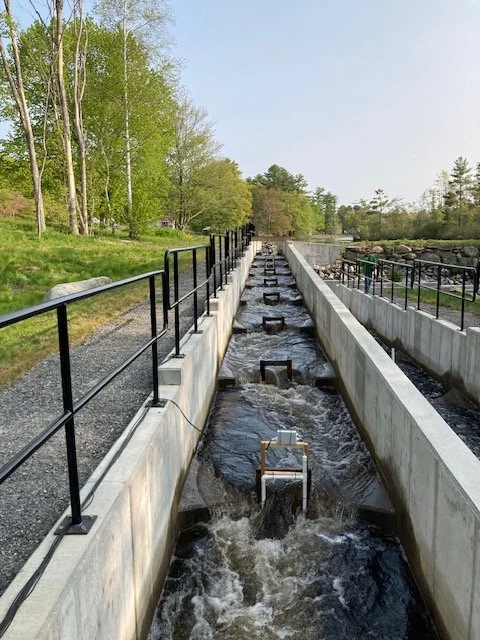
Fishway Completed and Operational
Thanks to a major grant from the National Oceanic and Atmospheric Association and the Department of Marine Resources, this Fishway has been operational since 2019. The design has been recognized as one of the best in the country. This lead to the United States Fish and Wildlife organization sponsoring a study of the passage of Alewife through the fishway and into the lake. The study will be conducted Spring 2022.
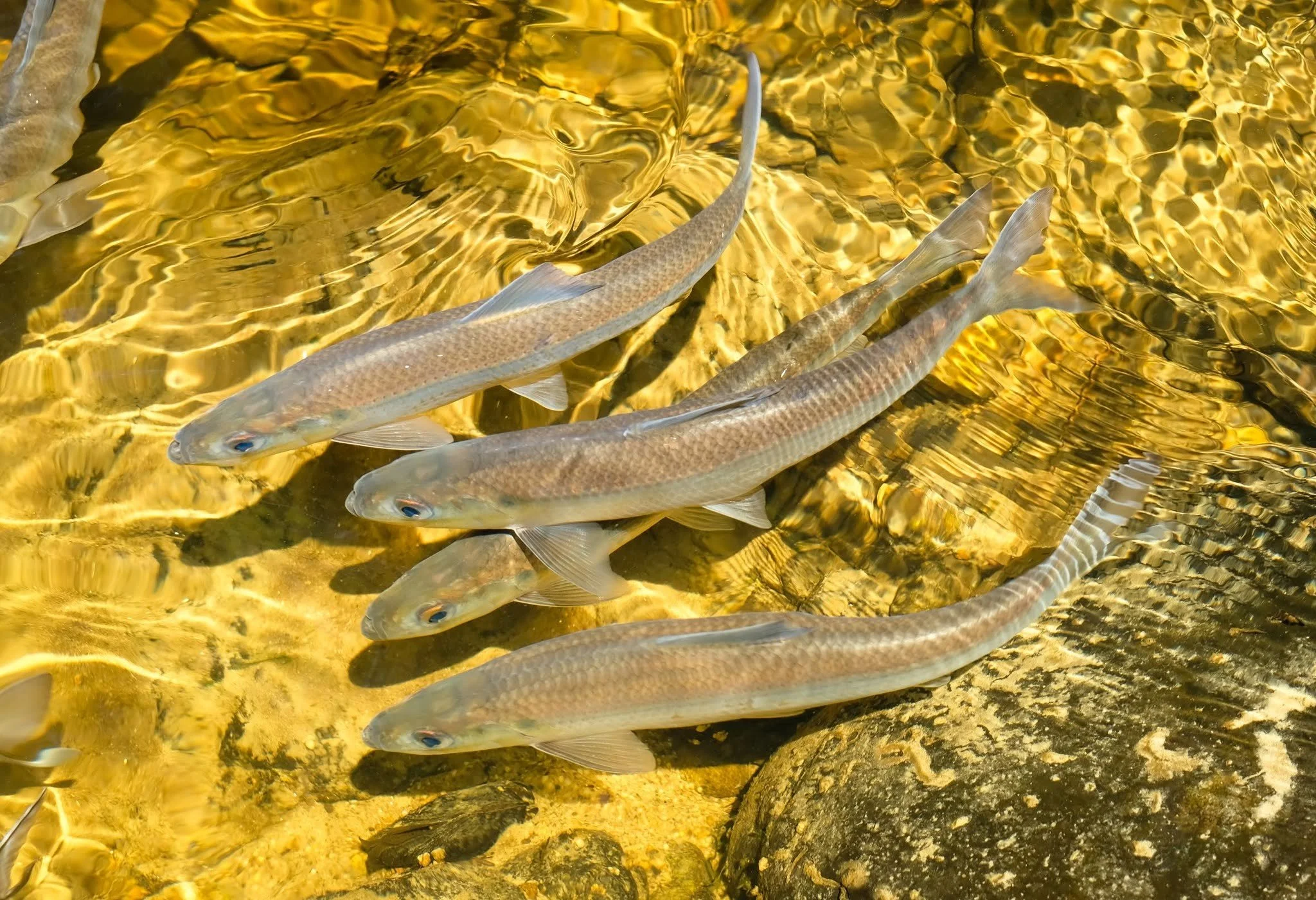
Why We Should Protect Alewives
Alewives are important to the ecology of freshwater, estuarine, and marine environments. They provide an alternative prey item for osprey, eagles, great blue heron, loons and other fish eating birds at the same time juvenile Atlantic salmon are migrating downriver. Alewives provide cover for upstream migrating adult salmon that may be preyed on by eagles or osprey, and for young salmon in the estuaries and open ocean that might be captured by seals. It is important to understand that alewives tie our ocean, rivers and lakes together, providing vital nutrients and forage needed to make healthy watersheds. Between and within those various habitats, everything eats alewives: striped bass, bluefish, tuna, cod, haddock, halibut, American eel, brook trout, rainbow trout, brown trout, lake trout, landlocked salmon, smallmouth bass, largemouth bass, pickerel, pike, white and yellow perch, seabirds, bald eagle, osprey, great blue heron, gulls, terns, cormorants, seals, whales, otter, mink, fox, raccoon, skunk, weasel, fisher, and turtles.
Learn more from this 11 minute video "Keystone: voices for the little fish" from the folks at Upstream Cobbossee that helps explain the importance of restoring sea-run fish passage.
Thanks to the efforts of many volunteers and community partners who worked to make the Togus Pond fishway possible so that we could do our part in protecting the alewife.