
Togus Pond Restoration Project
We all want clean water. The biggest threat to the lake is the hope that someone else will fix it.
Take a moment to view this inspiring video about the importance of protecting our lakes. The pond needs our help and it is our responsibility to take care of it and the wildlife it supports.
All of us who live on and use Togus Pond are here because of our love of the pond and the natural beauty it provides for us. The pond needs our help and it is our responsibility to take care of it and the wildlife it supports. Togus Pond is on the Maine Impaired Lakes Priority List.
Phase One was our recent scientific study, the Watershed-Based Management Plan. This was a 2-year study in partnership with Maine DEP, Ecological Instincts, Water Resource Services, and WLA. The complete report is available here.
The results of the survey indicated Togus Pond is high in phosphorus creating the perfect breeding ground for algae blooms. Since aluminum binds with phosphorus to keep it from feeding the algae, an Alum Treatment to correct the pond’s natural chemical balance is an appropriate way to alleviate Togus Pond’s algae blooms.
Lake Winnecook’s video about Togus Pond’s Alum Treatment.
What’s Next? Phase 3 - Second Alum Treatment
We are happy to announce we met our fundraising goal and completed the second Alum treatment in April 2026!
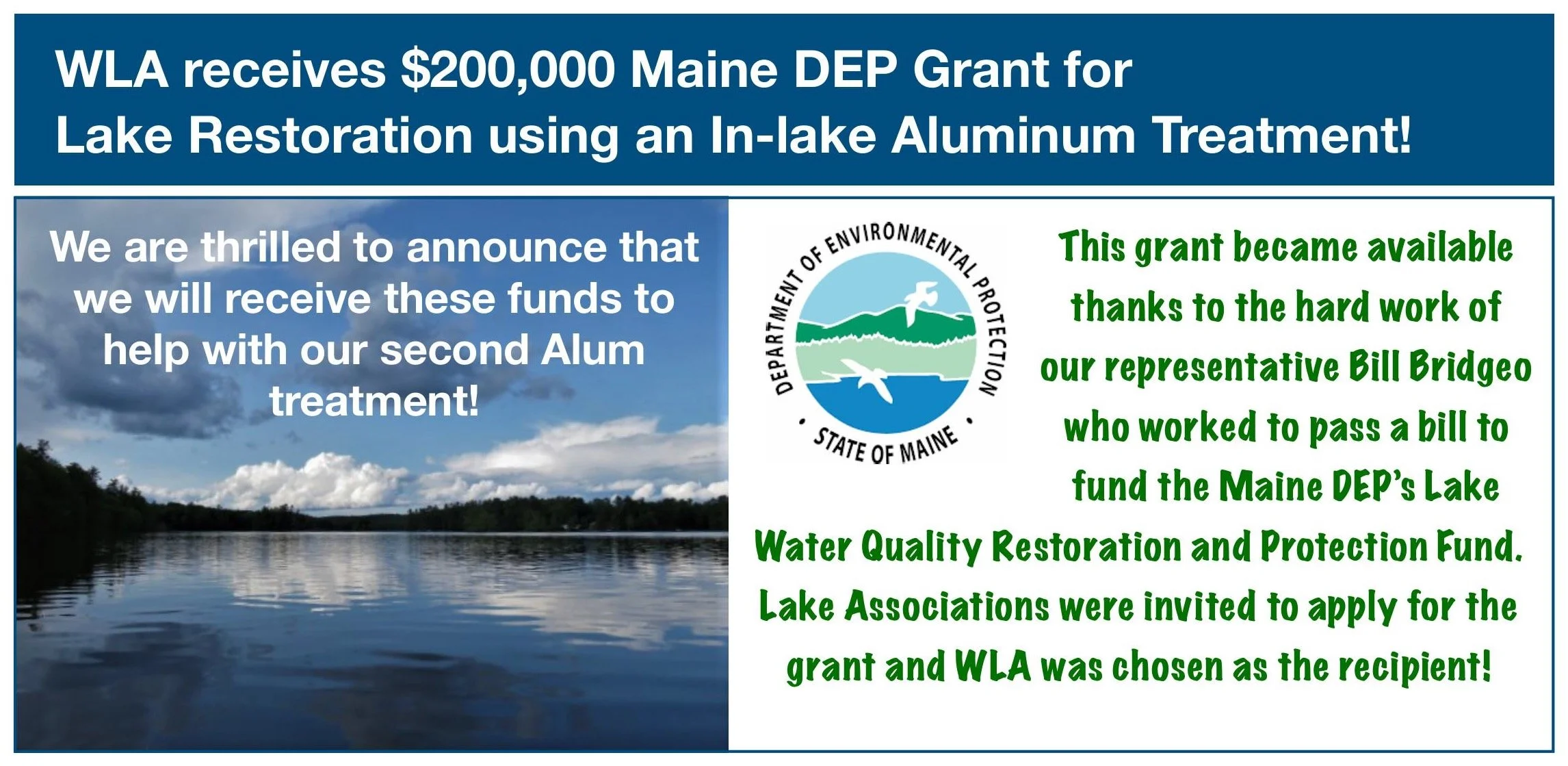
On April 26, 2024 SOLitude Lake Management successfully completed the first treatment of approximately 340 acres of our 674-acre pond, half of the lake surface area, with aluminum salts (Alum and sodium aluminate) to control phosphorus. We saw amazing results of clear water all summer and fall. But our work is not done. Plans are underway for the second Alum treatment. This is an important part of the project, making the treatment more effective and will add longevity to the treatment.
We are in the planning stages to do the next application in April 2026!
What is an Alum Treatment?
An Alum Treatment is a scientifically designed treatment that helps restore the lake’s natural chemical balance and prevent algae blooms.
Doing an alum treatment was recommended as a solution to inactivate phosphorus already in the water and at the bottom of the lake.

Success of East Pond Alum Treatment and what to expect for Togus Pond.
Listen to both of these recordings from speakers at two of our 2023 WLA Meetings. You will learn about the process, what to expect, and the similarities between our 2 lakes.
Edie Cornwall, President of the East Pond Lake Association came and gave a presentation on East Pond's Alum Treatment. This is a wealth of knowledge on the entire process they went through and the success of the treatment. She provides answers to a lot of questions about the treatment!

Jen Jespersen from Ecological Instincts gave a presentation at our Annual Meeting on what to expect with Togus Pond's Alum Treatment. Jen, who also did our 10 Year Watershed Based Management Plan, goes over details and answers questions.
Details of the Alum Treatment
Find out all of the details about what to expect for the Alum treatment by clicking the boxes above. The box on the left details the schedule and the box on the right is a recording of our 2024 Spring meeting with Doug Miller (WLA) and Dominic Meringolo from Solitude Lake Management going over everything to expect. Lots of great info!
We are on track working towards the second Alum Treatment in spring 2026! We have our permit in place from Maine DEP!
Once again we are partnering with SOLitude Lake Management to do the treatment. They are a trusted leader in the industry with years of experience and have a team of expert aquatic and fisheries biologists, ecologists, and environmental scientists.
We are also working with Maine DEP and Lake Stewards of Maine to oversee monitoring the water during and after the treatment.
Alum Treatment Area
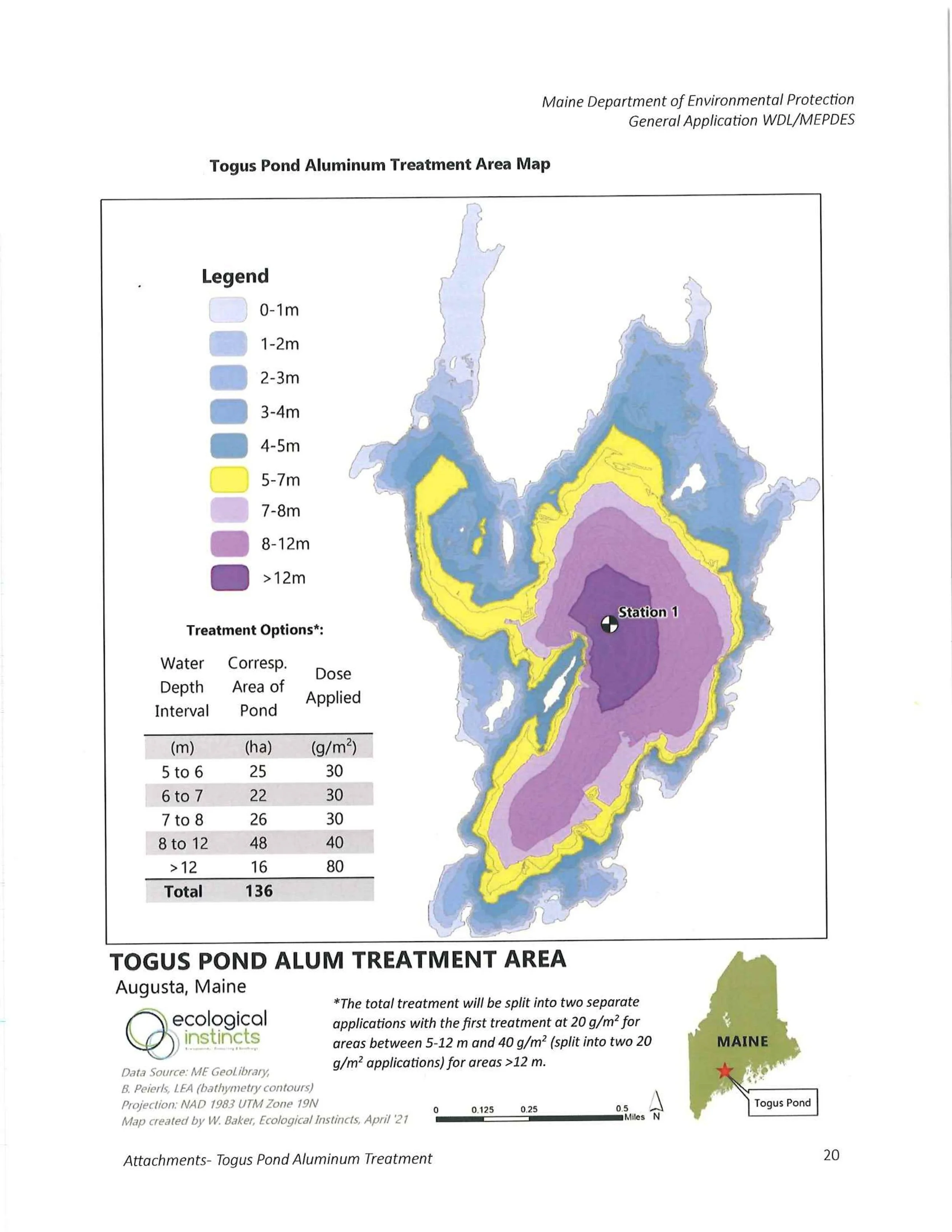
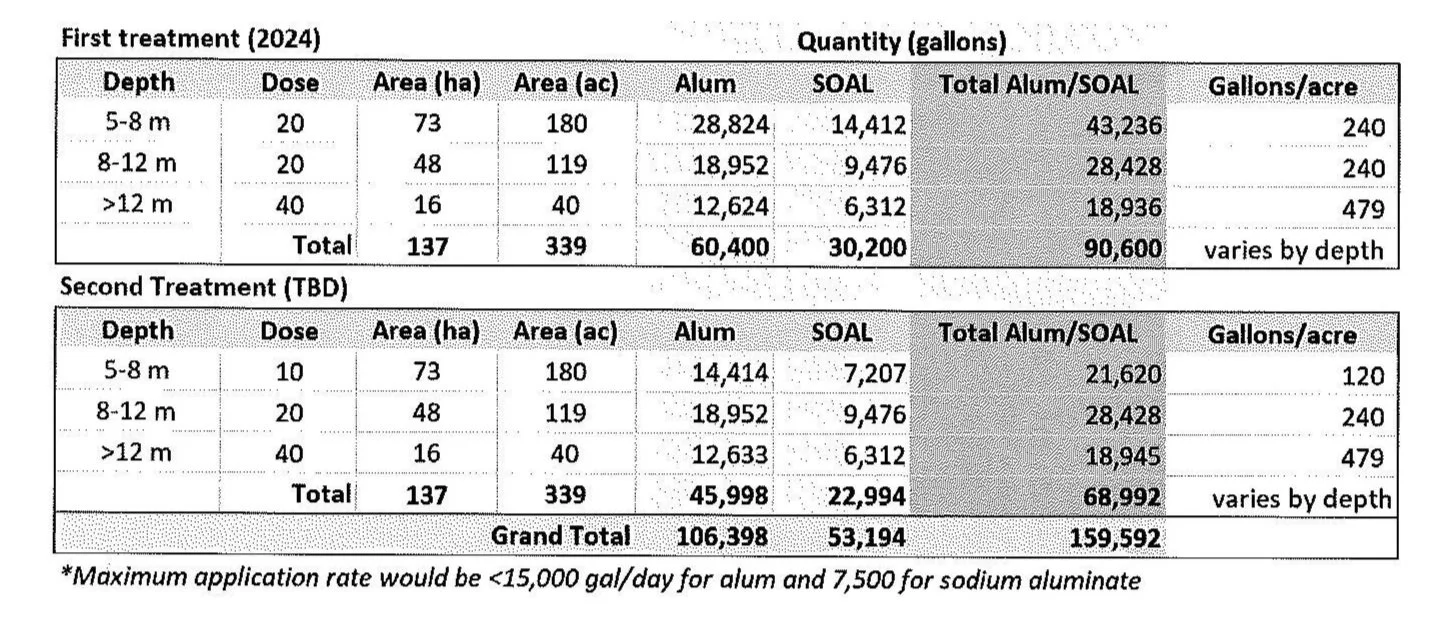
The goal of the proposed aluminum treatment is to reduce the current internal phosphorus load in Togus Pond by 90% (186 kg/yr) by applying 30 g/m? of liquid aluminum sulfate/ sodium aluminate to the water column at water depths between 5 and 8 m, applying a treatment of 40 g/m? to depths of 8-12 m, and applying a treatment of 80 q/m? to all depths >12 m. The recommended dosage was determined by Dr. Ken Wagner of WRS, Inc. (WRS, 2021) based on an assessment of phosphorus mass and the sediment analysis conducted by Dr. Emily Lesher of St. Joseph's College. The Worromontogus Lake Association, who will be overseeing the treatment, anticipates dividing the treatment into two separate applications separated, by 1 to 4 years. Table 3 (below) provides an estimate of the quantity of aluminum sulfate (alum) and sodium aluminate (SOAL) needed for each treatment by depth and area. The maximum application rate would be <15,000 gallons/day for alum and 7,500 for sodium aluminate, and a total daily application rate of < 22,500 gallons.
The Cost to Restore Togus Pond: $800,000
$ 30,000 Phase 1 - Raised! Project completed.
$400,000 Phase 2 - Raised! 1st Alum treatment starts April 22, 2024 - completed.
$400,000 Phase 3 - Raised! 2nd Alum treatment planned for spring 2026.
How will WLA raise the funds?
WLA has completed our "Last Big Push" campaign to raise the final funds to complete the 2nd Alum Treatment!
Everything depended on each of us making a wise investment. By donating 2-3% of the assessed tax valuation of our properties, together we raised enough to succeed.
With the State Grant covering half of the cost of the 2nd treatment and the generous support of the community we met our goal! We are grateful to everyone who has pledged their support for this project.
We Need to Protect Our Investment and Prevent Future Runoff! Below are some ways you can help.
-
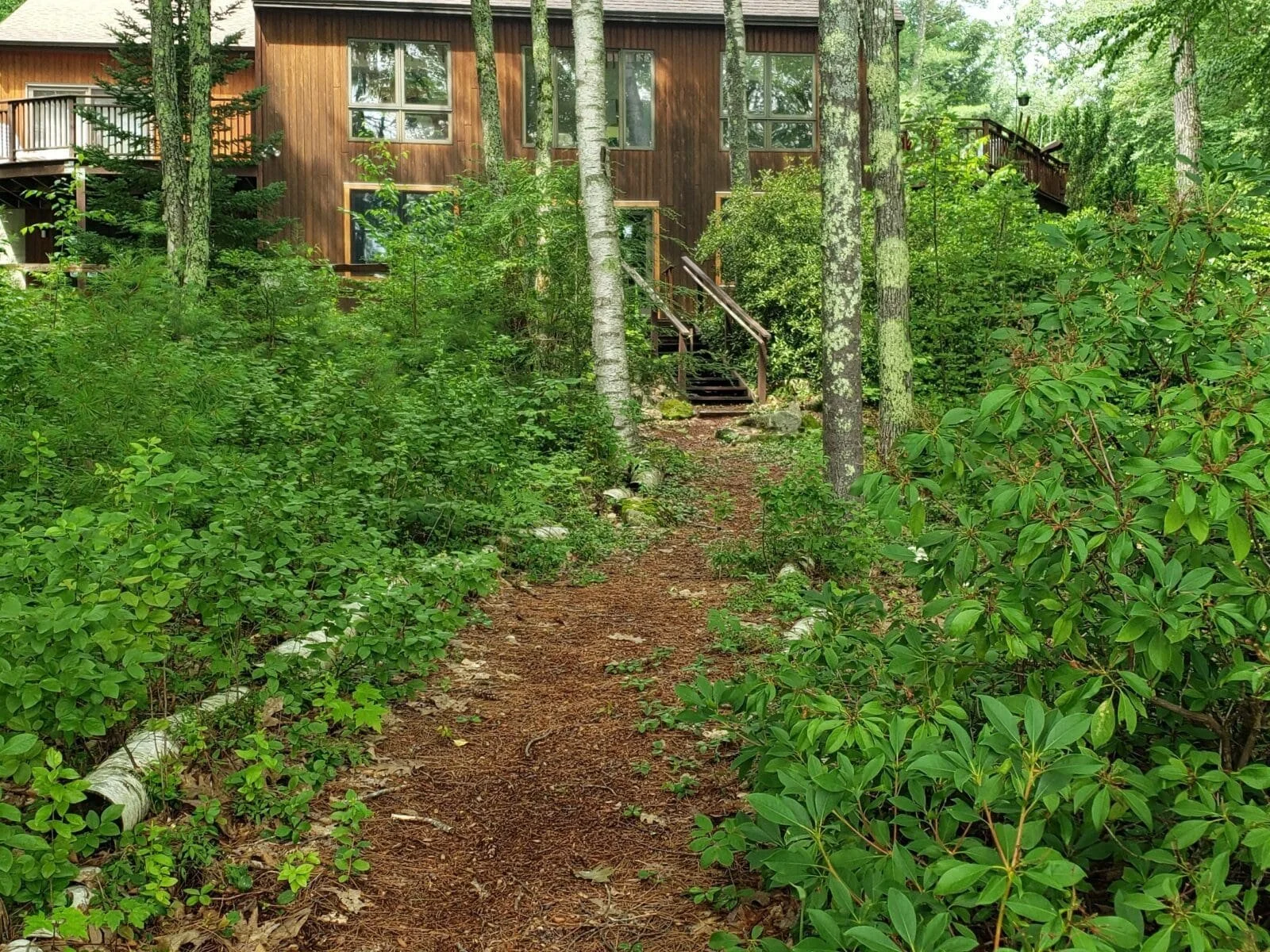
Sign up for a LakeSmart Visit
The Alum treatment will address the phosphorus that is already in the lake but we must work to prevent more runoff from entering the lake to keep future algae blooms at bay. A LakeSmart visit will help guide you on how to get started..
-
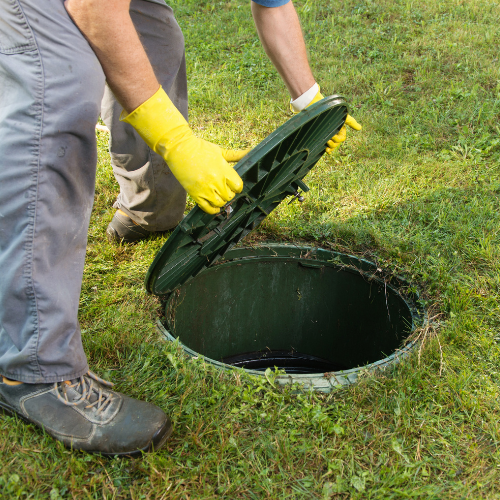
Maintain Your Septic System
Taking care of our septic systems is one of the easiest ways we can all help keep our lake clean and healthy. Regular checkups, pump-outs, and a little care with what goes down the drain make a big difference. Learn more about what you can do at the link below
-
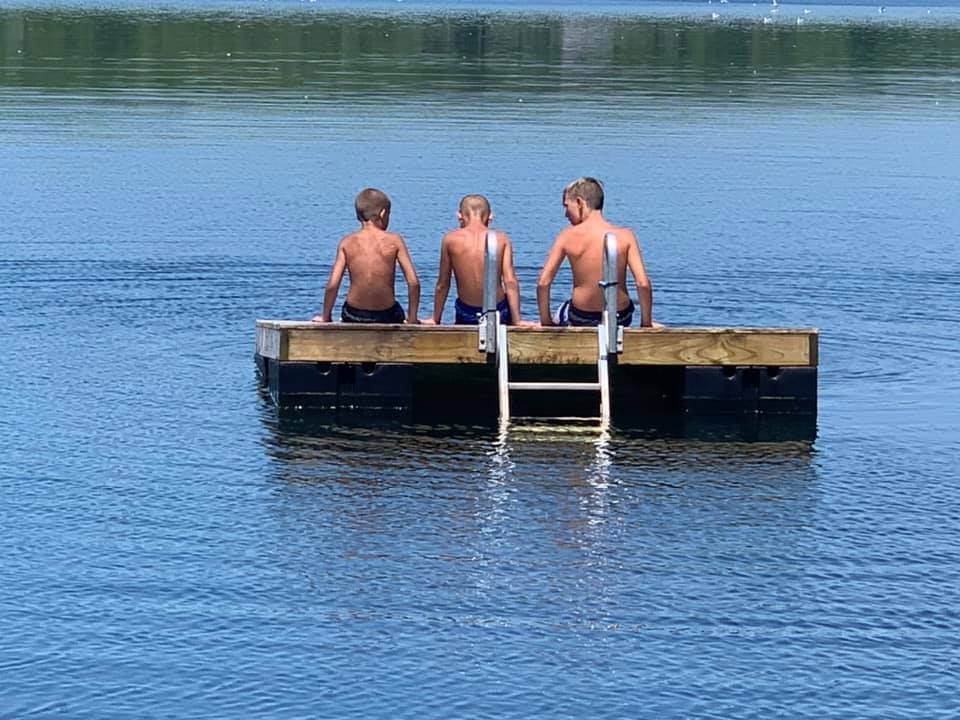
What you can do now!
There is a lot you can do now to help protect the lake! Become a volunteer, we have lots of opportunities to help out. Join the lake association, attend WLA meetings. Participate in the LakeSmart program.